KBA Rapida104: Roller Measurements Before Re-Covering
Documenting Press Geometry for Roller Re-Covering
Preparing offset print units for overhaul requires precise documentation of existing elastomeric sleeves and metal cores. Taking accurate KBA Rapida104 roller measurements before re-covering ensures that replacement coverings match original press geometry, journal alignment, and operating clearances without relying on guesswork.
When cores are sent out for stripping and re-covering, dimensional drift from previous grindings, journal wear, or mismatched spares can lead to installation issues if not cataloged in advance. Recording the structural dimensions of each position within the inking and dampening units establishes baseline parameters before old compound is removed.
Key Takeaways
- Every position across inking and dampening trains requires independent documentation of finished diameter, rubber face length, and total shaft length.
- Identifying roller function—such as ink form, ink transfer, ink ductor, water form, pan roller, or water transfer—prevents improper compound assignment.
- Journal seats and core ends must be inspected for mechanical runout and structural integrity before applying new rubber or polyurethane coverings.
- Clear color coding or item identification tags streamline re-installation and verify OEM-compatible fitment across the press.
What Are Roller Re-Covering Measurements?
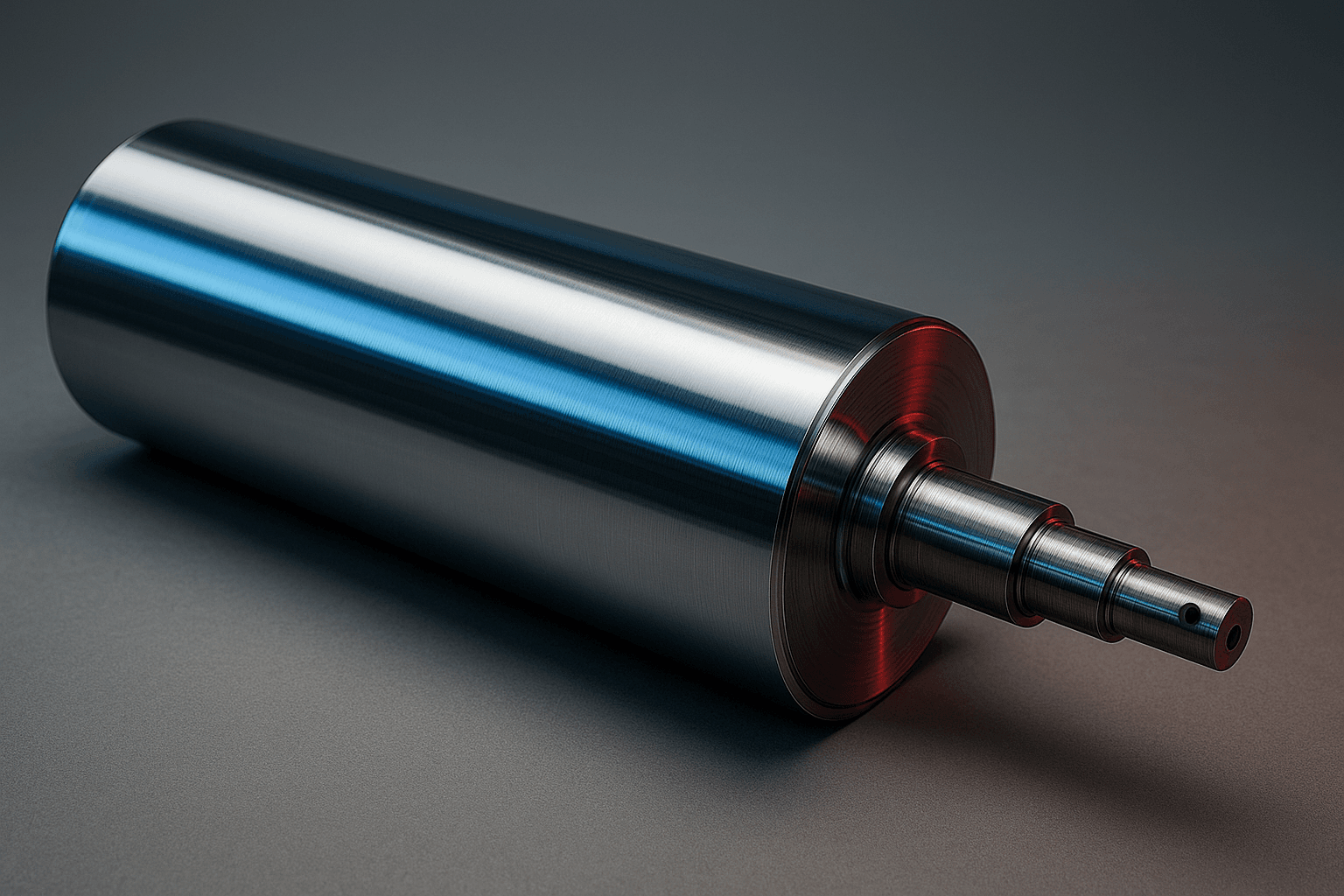
Roller re-covering measurements encompass the dimensional, geometric, and functional records gathered from an elastomeric roller core prior to stripping and vulcanization. These records define the required finished profile of the roller once new rubber or polyurethane compounds are cured and precision ground.
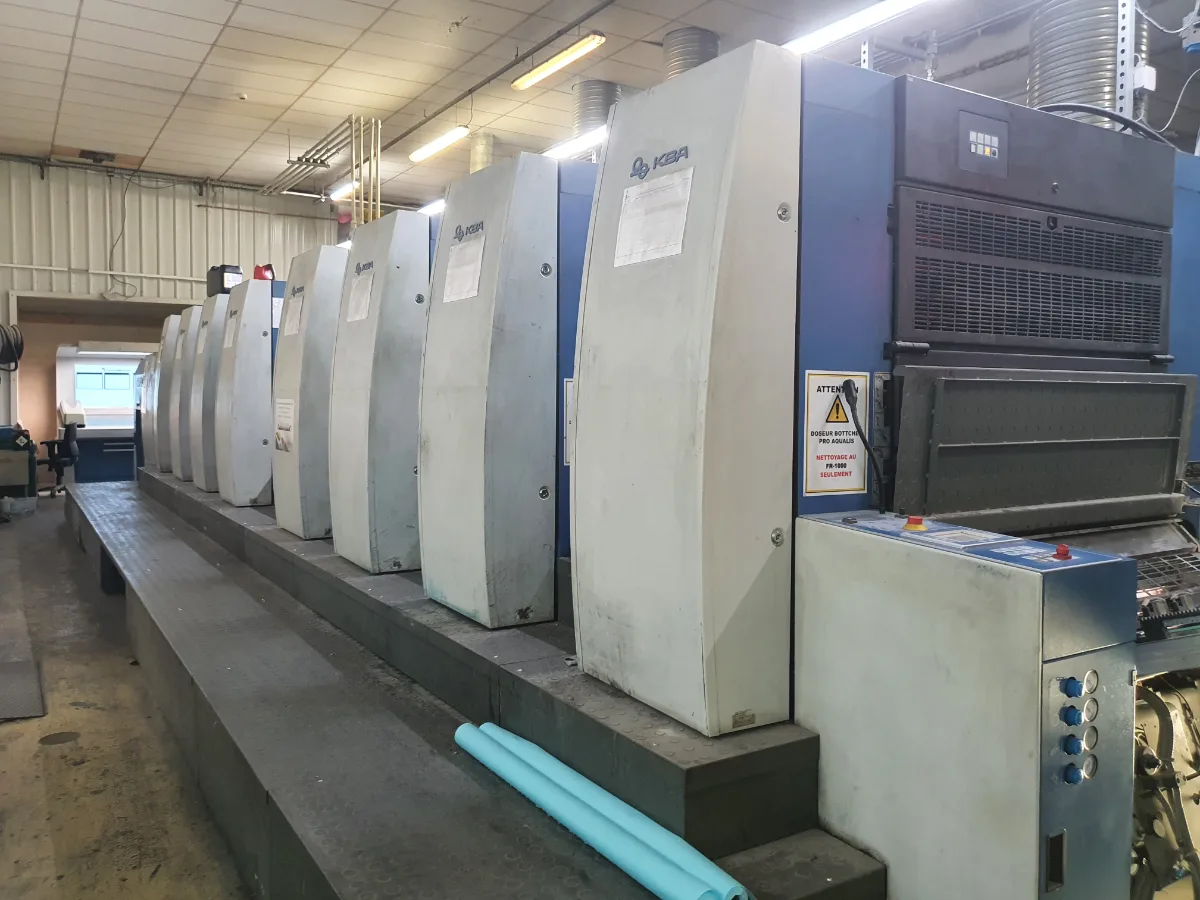
In sheetfed offset presses like the KBA Rapida104, rollers are distributed across dedicated inking units and dampening units. Because each unit position carries distinct hydrodynamic loads, fluid transfer duties, and oscillating contact points, measurement protocols must account for functional role, core construction, and finished elastomeric geometry.
Critical Dimensional Fields for Inking and Dampening Trains
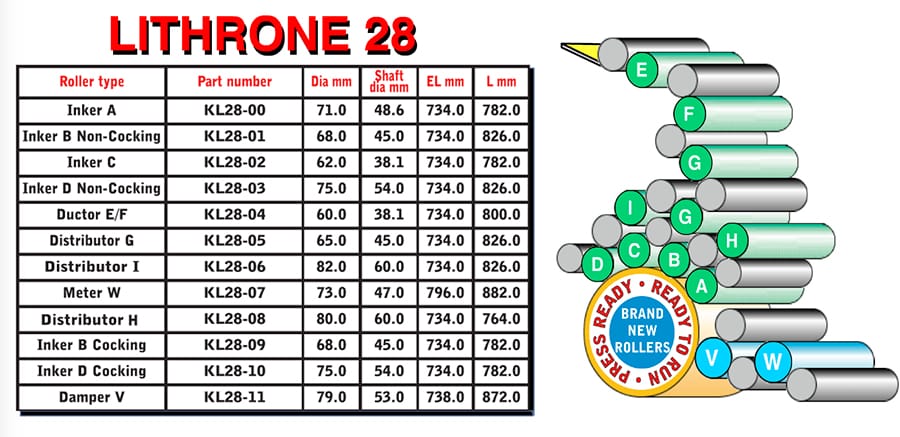
Documenting press geometry requires cataloging specific linear and diametrical metrics across each station. The following table outlines the required measurement fields by press unit and position type.
| Press Unit | Roller Description | Key Measurement Fields | Verification Focus |
|---|---|---|---|
| Inking Unit | Ink Form Roller | Roller diameter, rubber length, total length | Plate cylinder contact face and journal concentricity |
| Inking Unit | Ink Transfer Roller | Roller diameter, rubber length, total length | Oscillator contact profile and distributor clearances |
| Inking Unit | Ink Ductor | Roller diameter, rubber length, total length | Fountain roller engagement and stroke symmetry |
| Dampening Unit | Water Form Roller | Roller diameter, rubber length, total length | Even nip formation across the plate surface |
| Dampening Unit | Pan Roller | Roller diameter, rubber length, total length | Fluid pickup uniformity across fountain tray |
| Dampening Unit | Water Transfer Roller | Roller diameter, rubber length, total length | Film metering stability and oscillator tracking |
In addition to outer elastomeric profiles, technical documentation should account for core structural factors, journal bearing journals, drive tangs, and any custom bareback, numbering, or varnishing requirements specified for auxiliary finishing positions.
Selection Factors Before Re-Covering
Before finalizing specifications for re-covering, maintenance teams and roller buyers should evaluate several operational and mechanical criteria:
- Roller Function and Position: Confirm whether the core serves as an ink form, ink transfer, ductor, water form, pan roller, or rider roller.
- Core Condition: Check for journal score marks, bearing fit corrosion, dynamic unbalance, or structural core deflection.
- Compound Formulation: Select specialized rubber or polyurethane compounds formulated to resist ink chemistry, dampening additives, washes, swelling, and surface glazing.
- Geometric Tolerances: Verify that target diameters match OEM unit specifications to avoid running out of adjustment range in the roller sockets.
- Visual Identification: Ensure cores are marked with item identifiers or color-coded designations to prevent cross-position mix-ups during press re-assembly.
Step-by-Step KBA Rapida104 Roller Measurements Before Re-Covering
Following a standardized logging process safeguards against dimensional errors before cores leave the print facility.
- De-ink and thoroughly clean the roller assembly to expose base surfaces, bearing journals, and identifying core stamps.
- Identify the specific press station, confirming whether the roller belongs to the inking train or dampening train.
- Record total overall length from journal end to journal end, accounting for shaft steps, snap-ring grooves, and drive keys.
- Measure the elastomeric face length, documenting the exact span of the rubber or polyurethane covering.
- Measure outer diameter across multiple positions along the face to evaluate taper, barrel shapes, or localized wear patterns.
- Inspect and gauge bare core diameters adjacent to the elastomeric edges to ensure adequate wall thickness for compound bonding.
- Label each core with an item code, unit number, and functional description prior to dispatch for stripping and precision grinding.
Troubleshooting Common Measurement and Fit Discrepancies
Inaccurate records taken prior to re-covering often surface during press setup. The following table pairs common physical symptoms with their diagnostic checks and corrective actions.
| Observed Symptom | Diagnostic Check | Likely Cause | Corrective Action |
|---|---|---|---|
| Roller bottoms out in adjustment eccentric | Check finished roller diameter against unit catalog specifications | Covering ground over diameter or under diameter for that specific position | Verify correct station catalog dimension and re-grind or re-cover to specification |
| Uneven nip stripe across the cylinder face | Measure diameter along center and both ends of rubber face | Tapered grinding or core barrel wear undetected prior to re-covering | True bare core on lathe and precision grind covering to parallel tolerances |
| Excessive journal runout or vibration | Indicate shaft journals with dial test indicator | Damaged journal centers, bent shaft, or worn bearing seat | Repair or replace metal shaft before applying replacement elastomeric covering |
| Interference with side frames or washup blades | Measure total overall length and rubber face span | Incorrect covering face width overlapping onto shaft journals | Trim elastomer face back to prescribed rubber length dimensions |
Frequently Asked Questions
What are the primary dimensions required before sending a roller for re-covering?
The core three dimensions are finished outer roller diameter, rubber face length, and total shaft length. Additionally, bare core diameter and journal dimensions should be verified to confirm structural fit.
Why must inking and dampening rollers be cataloged separately?
Inking rollers and dampening rollers handle fundamentally different chemical environments and nip pressures. Dampening rollers require compounds resistant to fountain chemistry and water film metering, whereas inking positions demand materials tuned for solvent and ink resistance.
Can custom bareback or numbering rollers be measured using the same protocol?
Yes. Custom bareback, varnishing, and numbering rollers require the same core documentation—total length, working face length, and outer diameter—along with any specialized surface profiling notes.
Approved Evidence and Reference Context
This guide references technical specifications and roller categories documented in the approved manufacturer data for sheetfed offset presses:
- Cooper Rollers — KBA Rapida104 Product Catalog and Specifications: Establishes roller functional classifications across inking units (form, transfer, ductor) and dampening units (water form, pan roller, water transfer), dimensional fields (diameter, rubber length, total length), and compound resistance criteria.
Related Reading and Press Maintenance Resources
For complete machine configurations, compound compatibility selections, and press maintenance best practices, review the following related resources:
- KBA Rapida104 Roller Specification and Part Number Directory
- Offset Press Roller Maintenance: Preventing Swelling and Glazing
- Elastomeric Compound Guide: Selecting Rubber and Polyurethane for Sheetfed Inking Trains
- Bareback, Varnishing, and Specialty Roller Preparation Guide