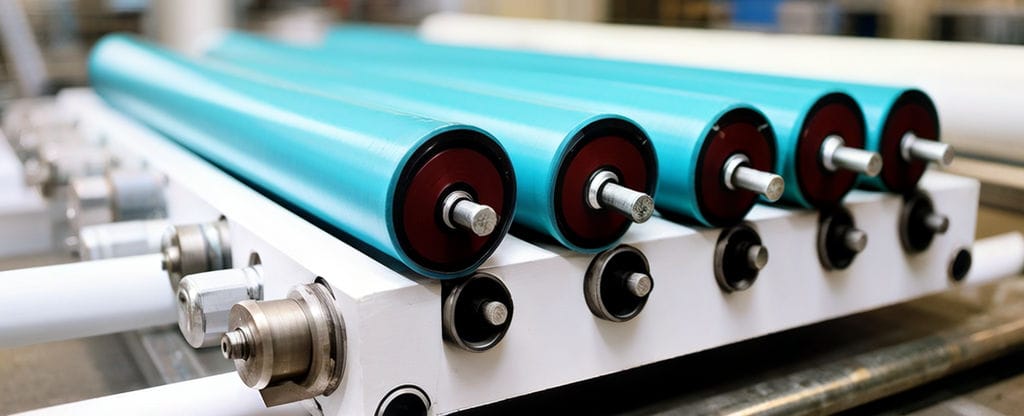
ADAST/DOMINANT 515/525: Roller Measurements Before Re-Covering
Introduction to Re-Covering Verification
Accurate recording of ADAST/DOMINANT 515/525 roller measurements before re-covering is essential for maintaining ink and dampening balance across the press. Over time, continuous operational contact, chemical washdowns, and mechanical friction alter the outer geometry of rubber rollers, masking the core manufacturer dimensions. Establishing an exact baseline before stripping worn compound ensures that the replacement rubber matches the mechanical requirements of the printing unit.
Offset printing presses rely on precise cylinder-to-roller contact stripes. When sending cores to a recovering facility, relying solely on worn outer rubber can lead to improper nip pressures, accelerated bearing wear, or uneven ink film distribution. Recording standardized dimensional criteria beforehand prevents miscommunication and ensures proper operational geometry.
Key Takeaways
- Document roller diameter, rubber face length, and total shaft length for every individual position before dispatching cores.
- Distinguish clearly between functional roller positions within the inking unit and the dampening unit.
- Verify core integrity, journal roundness, and bearing seat condition prior to stripping worn elastomeric coverings.
- Track position-specific designations such as ink forms, ink distributors, ink ductors, water forms, and water ductors.
- Ensure core identification marks correspond directly to machine schematic locations rather than relying solely on worn rubber profiles.
Understanding Roller Dimensional Terminology
Before preparing rollers for stripping and recovering, maintenance teams must apply consistent dimensional definitions across all press components. Misinterpreting shaft reference points or rubber boundaries can lead to fitting errors during installation.
- Roller Finished Diameter: The overall outer diameter of the roller when vulcanized and ground to operational size.
- Rubber Face Length: The continuous axial length of the rubber covering that contacts form rollers, distributors, or plate cylinders.
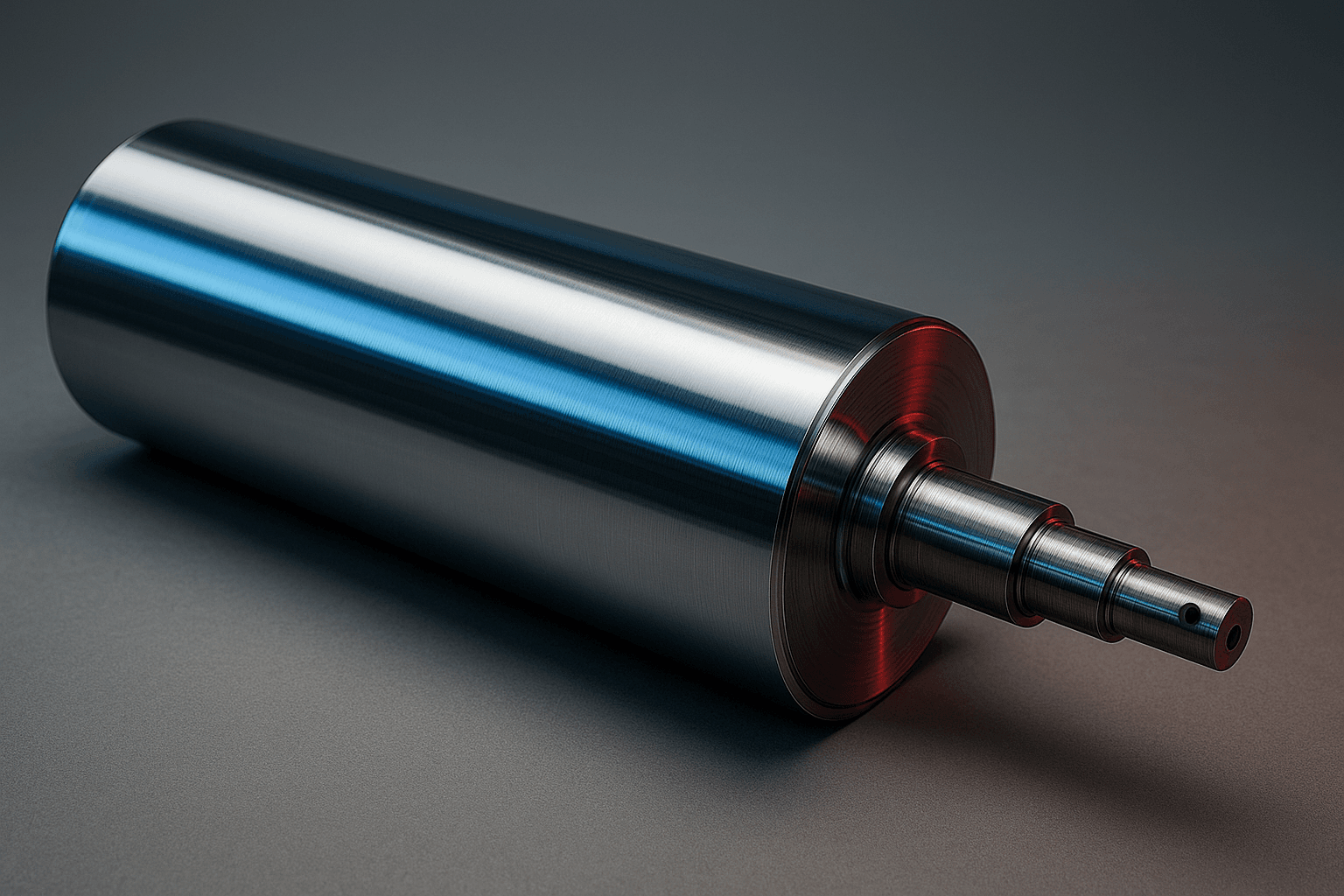
- Total Length: The complete tip-to-tip dimension of the roller core, encompassing journals, bearing seats, and drive ends.
- Core Journal Diameter: The un-covered metal ends machined to fit into press bearings, bushings, or mounting brackets.
ADAST/DOMINANT 515/525 Roller Measurements Before Re-Covering
Press units in the ADAST and DOMINANT series utilize multiple distinct roller positions, each engineered with specific functional geometries. In the inking unit, rollers are divided between ink form rollers, ink distributors, and ink ductors. In the dampening unit, water form rollers and water ductors control fountain solution transfer. Riders can also be integrated into the mechanical assembly.
Because multiple positions within the inking train share similar visual profiles but differ in finished diameter or shaft configuration, recording the specific position alongside dimensional fields is critical. The critical dimensional fields required by re-covering technicians include:
| Roller Unit Position | Functional Classification | Critical Dimensional Field Requirements |
|---|---|---|
| Inking Unit | Ink Form Roller | Finished diameter, rubber face length, total shaft length, journal fit |
| Inking Unit | Ink Distributor | Finished diameter, rubber face length, total shaft length, oscillating clearance |
| Inking Unit | Ink Ductor | Finished diameter, rubber face length, total shaft length, cam pivot alignment |
| Dampening Unit | Water Form Roller | Finished diameter, rubber face length, total shaft length, water transfer profile |
| Dampening Unit | Water Ductor | Finished diameter, rubber face length, total shaft length, pan clearance |
| Auxiliary Unit | Rider Roller | Outer diameter, face width, total core length |
Pre-Covering Evaluation Factors
Before sending cores for re-covering, maintenance engineers must evaluate structural and operational criteria beyond basic dimensions to ensure the finished assembly performs properly in the press.
- Shaft and Journal Runout: Check metal shafts for deflection or eccentricity caused by mechanical jams or bearing seizures.
- Bearing Seat Wear: Inspect bearing surfaces on the shaft ends for scoring, fretting corrosion, or undersized wear spots.
- Compound Compatibility: Determine whether the unit operates conventional, hybrid, or specialty inks to ensure proper elastomeric selection.
- Core Surface Condition: Confirm that the underlying core barrel is free of severe pitting or structural damage that could compromise rubber bonding.
- Machine Location Mapping: Verify whether the core belongs to an ink form, distributor, or dampening position to avoid mixing non-identical shafts.
Step-by-Step Measurement and Core Audit Protocol
- Degrease and Clean Assembly: Remove residual ink, dampening chemistry, and grease from both the rubber body and metal shaft extensions.
- Tag Machine Position: Label each roller with its designated unit location, distinguishing ink form rollers, ink distributors, ink ductors, water forms, and water ductors.
- Record Total Length: Measure the entire shaft length from end to end across both journals using a calibrated measuring instrument.
- Document Rubber Face Length: Measure the exact axial span of the elastomeric covering, noting edge undercut or bevel transitions.
- Log Finished Diameter Reference: Note the target finished diameter specified for that machine location, referencing press documentation rather than worn rubber profiles.
- Inspect Core Integrity: Check journal concentricity, keyways, pin holes, and bearing landings prior to rubber stripping and recovering.
Dimensional Discrepancies and Corrective Actions
Discrepancies identified during pre-covering inspection often signal deeper mechanical issues within the press unit. Addressing these factors avoids compounding errors during grinding and vulcanization.
| Observed Condition | Likely Cause | Verification Check | Corrective Action |
|---|---|---|---|
| Tapered rubber profile across face length | Uneven nip pressure or skewed roller socket adjustment | Measure diameter at both ends and center | Restore proper cylindrical profile during recovering; align press sockets |
| Swollen or hourglass diameter profile | Chemical absorption or localized solvent washdown accumulation | Compare center diameter with end clearances | Specify compound resistant to operating wash chemistry |
| Journal wear or grooving at bearing seats | Failed bearings, improper lubrication, or fretting corrosion | Check journal runout and seat diameter using micrometer | Repair or metal-spray journal seats before re-covering |
| Mismatched shaft length during installation | Incorrect position tagging between inking and dampening units | Compare recorded total length against press layout | Re-tag core to correct functional unit position |
Frequently Asked Questions
Why should worn rubber diameter not be used as the primary dimension for re-covering?
Worn rubber suffers from shrinkage, chemical swelling, or mechanical abrasion, meaning its existing dimensions rarely match the original factory specifications required for balanced nip contact.
What components make up the inking and dampening roller set on these machines?
The roller train includes ink form rollers, ink distributor rollers, an ink ductor, water form rollers, and a water ductor, with optional riders available for specific press configurations.
Why is recording total length critical if only the rubber is being replaced?
Total length ensures that cores are matched to their specific functional positions within the press frame, preventing mix-ups between positions with identical face lengths but distinct shaft extensions.
Sources and Approved Evidence
This guide references technical classifications and machine unit positions documented in approved first-party engineering resources:
- Cooper Rollers: Product and technical specifications documentation for ADAST/DOMINANT 515/525 roller systems, covering inking units, dampening units, and rider configurations.
Related Reading
For additional press maintenance insights, explore our companion guides on roller handling, offset nip adjustment, and elastomeric compound selection across commercial offset printing systems.